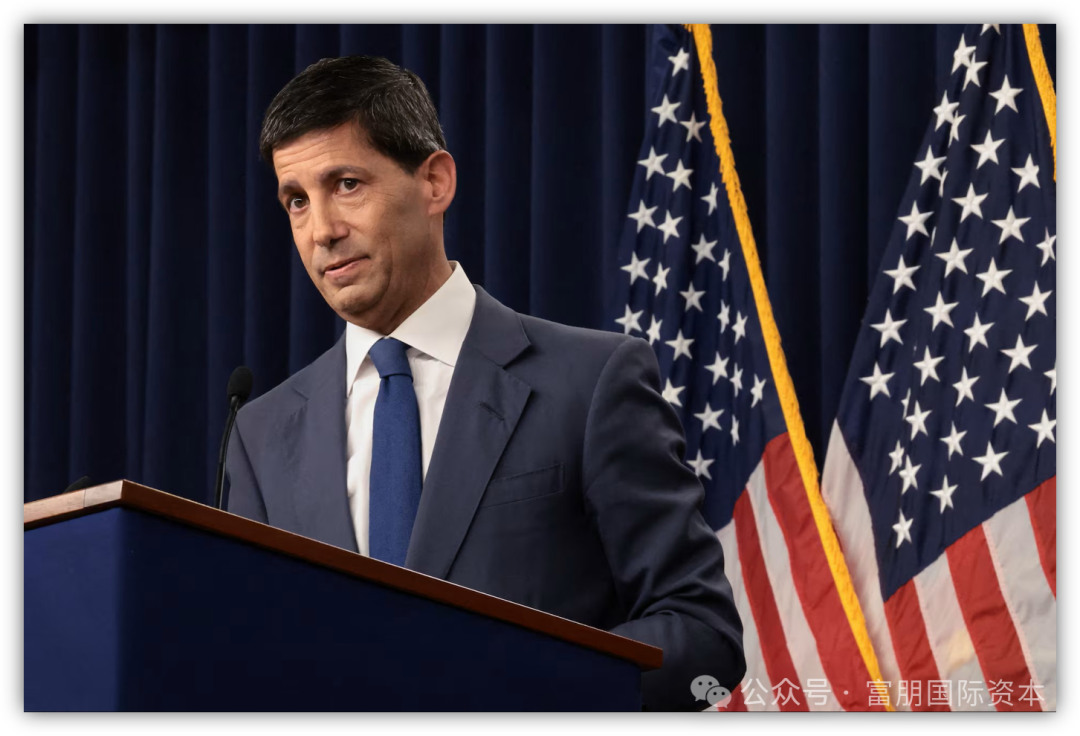
New Federal Reserve Chair Kevin Warsh; Source: Reuters.
On July 29, the Federal Reserve kept the federal funds rate unchanged at 3.50%–3.75%. Yet this meeting, which appeared to involve “no action,” triggered a sharp sell-off in long-term U.S. Treasuries.
The 30-year U.S. Treasury yield briefly rose above 5.2%, reaching its highest level since 2007. Markets reacted sharply following Warsh’s press conference. What unsettled investors was that, even after listening to the press conference, they still could not determine how the Federal Reserve intended to bring inflation back to 2%.
The market still appears to be in an “adjustment and observation period” following the change in Fed leadership:
Markets are not accustomed to a Federal Reserve that cannot be modeled.
01 Investors Are Pricing the Policy Path Over the Next Several Years
A natural question arises: if the Federal Reserve did not raise rates, why did long-term interest rates rise so sharply?
Because financial markets are not pricing only today’s policy rate, but all the possible policy rates that may prevail over the next several years.
At the most simplified level:
Long-term Treasury yield = expected average of future short-term interest rates + term premium.
The first component reflects the level at which investors believe the Federal Reserve will keep rates in the future; the second is the additional risk compensation investors demand for holding long-term bonds.
When forward guidance is relatively clear, the market may not know exactly what will happen at the next meeting, but it can at least understand the Federal Reserve’s decision-making framework. For example:
- At what level of inflation would the likelihood of rate cuts increase?
- How much would the labor market need to weaken before the Fed placed greater weight on employment risks?
- If growth remained strong while inflation stopped declining, would rates need to remain elevated for longer?
This information effectively provides the market with a “conditional map.” Investors cannot predict the future precisely, but they can continuously update their assessments as new data arrive within a relatively stable set of rules. What forward guidance truly compresses is the range of possible future interest-rate paths.
When that range narrows, term premiums decline, interest-rate volatility falls, and companies and investors can more easily conduct long-term financing, valuation, and asset allocation. The Federal Reserve’s own research and policy communications have likewise emphasized that clear communication can influence expected rate paths and overall financial conditions, thereby improving the transmission efficiency of monetary policy.
02 The Powell Era Provided a Set of Rules That Could Be Modeled
It is important to note that Powell never promised the market a fixed interest-rate path.
He repeatedly emphasized that monetary policy was “not on a preset course” and that each meeting would be decided based on economic data. At the same time, Powell would generally tell the market which variables the Federal Reserve was focusing on and how those variables would affect the policy trade-offs.
One of the most common formulations during the Powell era was:
The Federal Reserve would determine the timing and magnitude of policy adjustments based on “incoming data, the evolving outlook, and the balance of risks.”
In addition, the Powell era included press conferences after every FOMC meeting, quarterly Summary of Economic Projections, inflation and unemployment forecasts, and policy-rate projections commonly referred to by the market as the “dot plot.”
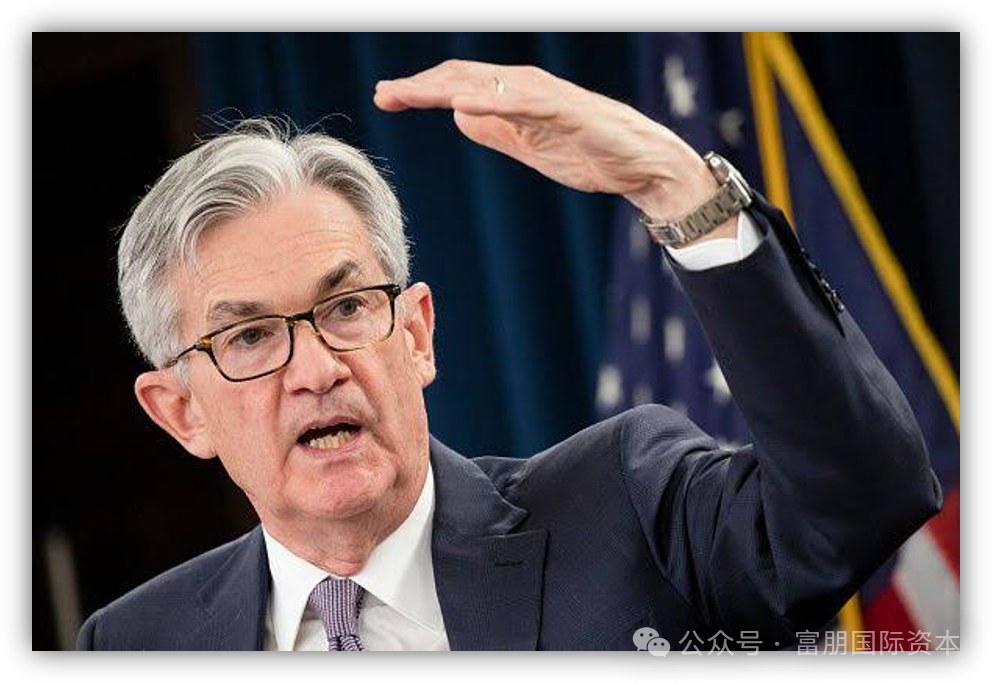
Former Federal Reserve Chair Jerome Powell; Source: Investopedia.
The dot plot was of course not a commitment, and the forecasts often changed, but they still provided at least three important pieces of information:
First, the Federal Reserve’s assessment of the baseline economic scenario;
Second, the degree of disagreement within the Federal Reserve;
Third, the broad relationship between the policy rate and forecasts for inflation, growth, and employment.
As a result, although the market during the Powell era could still misjudge the timing of rate cuts, it generally knew which variables it should use to construct its expectations. New data released by the Federal Reserve might change the answer, but they did not usually change the entire method used to reach that answer.
This is the most important difference between Powell and Warsh:
Powell often refused to provide a definitive answer, but tried to show the reasoning process; Warsh is not only unwilling to provide the answer, but is also actively reducing disclosure of the reasoning process.
03 Why Does Warsh Want to Eliminate Forward Guidance?
Warsh’s starting point is not without rationale.
He believes that, after the Global Financial Crisis, the Federal Reserve gradually began providing the market with too much information. Markets started paying excessive attention to every word from the central bank rather than independently assessing economic fundamentals.
At the July press conference, Warsh explicitly said that the Federal Reserve wanted market participants to learn to “watch the ball, not the referee.” He argued that reducing forward guidance could allow Treasury yields, exchange rates, and other asset prices to reflect real economic information more directly, rather than simply echoing the Federal Reserve’s forecasts.
In theory, this reform has some merit. Excessively precise forward guidance can create three types of problems:
First, forecasts can easily be misunderstood by the market as commitments. Once economic conditions change and the Federal Reserve is forced to adjust policy, markets may conclude that the central bank has “broken its promise.”
Second, excessive reliance on central-bank guidance may weaken the market’s own price-discovery function, creating a form of “Fed dependency.”
Finally, when investors believe that the Federal Reserve will eliminate all risks in advance, they may proactively increase leverage and duration exposure, further reinforcing the moral hazard associated with the “Fed put.”
The Federal Reserve has also acknowledged in the past that if forward guidance is mistakenly interpreted as a fixed commitment, subsequently having to revise it may instead create greater uncertainty and volatility.
So the problem is not that Warsh wants to reduce specific interest-rate projections. The real problem is that, while removing path guidance, he has not provided a sufficiently specific policy reaction function to replace it.
04 The Lack of a Reaction Function Amplifies the Impact of Every Economic Data Release
Suppose the market initially believes there are only three main policy-rate paths over the next year: no change, one rate hike, or two rate hikes.
Under a clear policy framework, an inflation reading slightly above expectations might only shift the market modestly from “no change” toward “one rate hike.”
But without a clear reaction function, the same data point may force the market to consider many more possibilities at once:
- Will the Federal Reserve continue to wait?
- Will it suddenly raise rates several times in succession?
- Will it tighten through balance-sheet reduction rather than the policy rate?
- Will it tolerate higher inflation?
- If long-term rates have already risen, will the Federal Reserve view that as a reason not to raise rates?
The greater the number of possible outcomes, the wider the distribution of rate expectations, and the higher option prices and implied interest-rate volatility become.
As a result, in the Warsh era, the market impact of CPI releases, employment reports, oil prices, Treasury auctions, and speeches by Federal Reserve officials may all be amplified. Each new piece of information no longer merely updates the economic forecast; it may also force investors to reassess the Federal Reserve’s policy rules.
Research by the Bank for International Settlements also shows that greater bond-market volatility—reflecting increased interest-rate uncertainty—can raise term premiums and have a contractionary effect on economic activity. In other words, policy uncertainty itself can become a form of monetary tightening.
05 The Most Dangerous Part of the Warsh Framework Is the “Market–Fed” Feedback Loop
At the July press conference, Warsh repeatedly said that the Federal Reserve wanted to observe “undistorted market signals.”
He also noted that, even without an adjustment to the policy rate, both nominal and real interest rates had already risen significantly, meaning that the market itself had delivered a substantial tightening of financial conditions. Warsh viewed this development as evidence that the market’s price-discovery function was recovering and believed that higher market interest rates were, to some extent, helping the Federal Reserve control inflation.
But this creates a critical endogeneity problem:
The market is already pricing assets based on expectations of Federal Reserve policy, while the Federal Reserve is now trying to use market prices to determine whether policy is sufficiently restrictive.
This could create a dangerous loop:
Investors, concerned that the Federal Reserve is falling behind the inflation curve, begin selling long-term Treasuries;
Long-term yields rise as a result and term premiums widen;
The Federal Reserve observes that financial conditions have already tightened and concludes that the market has done part of its work, so it continues to delay rate hikes;
The market then becomes even more concerned that the Federal Reserve lacks the willingness to proactively control inflation and therefore demands even greater compensation in long-term yields.
Ultimately, continuously rising long-term interest rates may not mean that the market believes the Federal Reserve will become more hawkish. Instead, they may indicate that the market lacks confidence in the Federal Reserve’s ability and willingness to control inflation.
This also explains why long-term Treasuries reacted so negatively after the July meeting: the market was increasing the risk compensation it demanded for holding long-term U.S. dollar assets.
06 Why Is the Market More Concerned About Long-Term Interest Rates?
The federal funds rate primarily affects the cost of overnight funding, but the financing costs actually faced by the U.S. real economy are determined much more by medium- and long-term market interest rates. Mortgages, commercial real estate loans, corporate bonds, infrastructure financing, M&A financing, and valuations of growth companies all depend heavily on the long-term risk-free rate.
If long-term rates simply rise steadily, companies can still respond by adjusting financing plans and valuation models.
The real problem is an increase in long-term interest-rate volatility.
A company may be able to tolerate a long-term financing cost of 5%, but it is far more difficult to determine issuance timing, financing size, and hedging strategies in an environment where yields may repeatedly fluctuate between 4.5% and 5.5% within a matter of weeks.
This is also why high interest-rate volatility is often more damaging to risk assets than simply high interest rates.
- Small-cap stocks and highly leveraged companies face greater refinancing risks;
- Technology and growth stocks, with a larger proportion of cash flows occurring further in the future, are more sensitive to changes in discount rates;
- Companies that rely on long-term debt to fund capital expenditures face higher financing and hedging costs;
- Credit investors demand greater compensation for both the risk-free rate and credit risk.
When interest-rate volatility rises, banks, insurance companies, bond funds, and risk-parity funds may also be forced to reduce positions because of duration limits, volatility targets, and value-at-risk models, further amplifying the initial move in interest rates.
Therefore, what equity and credit markets truly fear is not an occasional 25-basis-point Fed rate hike, but an increasingly wide probability distribution for future discount rates.
07 Conclusion: High Volatility in the Warsh Era May Not Be Temporary
Warsh wants markets to stop focusing on the Federal Reserve and return their attention to economic fundamentals.
But the reality is that the Federal Reserve controls the world’s most important short-term risk-free interest rate, and its policy will inevitably remain a core variable in every asset-pricing model. Less central-bank communication will not make monetary policy less important; it will simply force markets to demand a higher risk premium to compensate for the information gap.
The problem in the Powell era was that markets sometimes relied too heavily on the Federal Reserve’s forecasts; the problem in the Warsh era may be that markets have lost even the methodology for forecasting the Federal Reserve itself.
Therefore, until Warsh clarifies his policy framework, investors should be prepared for the following:
Future interest-rate markets may no longer fluctuate around one relatively concentrated policy path, but instead switch frequently among multiple competing policy scenarios.
Every inflation report, every employment release, and every round of oil-price shocks may reopen the entire range of policy-path pricing.
High interest rates may not last forever, but high interest-rate volatility may well become a more important new normal in the Warsh era.
In 2024, Fupeng International has successfully completed five SPAC listings, setting an annual record for a single institution in the industry.
Enterprises with clear listing plans can contact Fupeng International for negotiation. With our cutting-edge capital structure design capabilities, we help innovative enterprises seize the historic opportunities in the SPAC 2.0 era.